Wednesday, January 18, 2012

Birds Need Sleep!

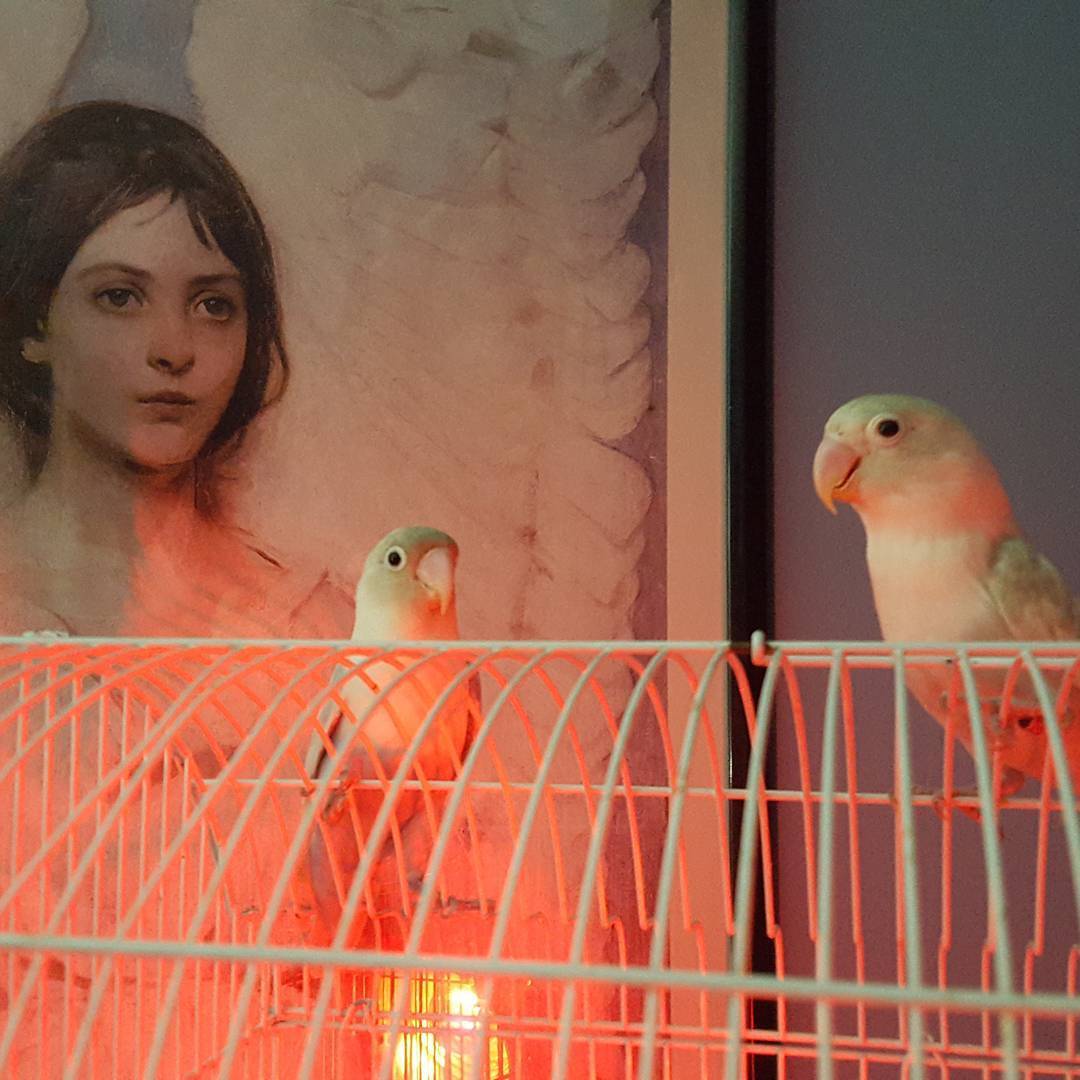
Because most birds live right on or near the equator, your parrot is instinctually driven to receive equal amounts of daylight and dark. Birds who don’t get enough sleep often become hormonal, cranky, territorial, aggressive, and loud. A lot of behavior problems are caused by lack of sleep! Make sure your bird is generally getting around 10-12 hours of sleep, every night. 

If you’re a night owl, but get up early, you need a separate room for your bird to sleep in peace and quiet. Birds also benefit from having a sleep cage, because in the wild, parrots don’t stay in the same tree for everything. They’re out and about, roosting in one tree, hanging out for the day in another, and foraging in yet another. Mimicking this helps reduce cage guarding, aggression, and boredom. Imagine if you were in the same room, everyday! The Sleep cage only has to be bog enough for a water bowl, a perch or toy, and maybe a toy. They don’t need much room to sleep. Their day cage should be bigger, with playstands set up around the house so your bird can be out with you as much as possible.

Source: Link

Wednesday, January 11, 2012

Parrot Mill - Pierce County, WA

SOURCE: Link
We continue to support efforts to provide legal protections for parrots in Pierce and other counties, and to promote the welfare of birds.

Parrot Depot

Beginning in the early 1980's, Martha and her husband John Scudder owned and ran a parrot breeding farm, M&J Enterprises, in Roy, Washington. John Scudder passed away in 2002. Martha Scudder still owns the farm, now called Scudder's Parrot Depot, largely run by her live-in boyfriend, Robert Vincent. By Martha's family's own testimony, the facility has been in decline for a number of years, and Bob Vincent's arrival has not improved matters.

Picture taken March, 2006


Life at Parrot Depot: dark cages in poorly sheltered ramshackle barns


Parrots—universally recognized for their intelligence—are farmed in utterly degrading conditions.
We have created this web site not just to try and help set things right at Parrot Depot, but to raise the issues involved, which extend to other farms and to the role of county and state governments in the bird-breeding industry. Despite public perception that widespread protections are in place to prevent animal cruelty, the facts are that laws and ordinances do not apply equally to all situations, types of pets, or animals in general. Birds such as parrots are often left woefully unprotected, inviting exploitation and abuse.
We want to insure our readers do not confuse Scudder'sParrot Depot with Scudders' Happy Hookbills Ranch, owned and run by Martha's son and daughter-in-law, John and Kathy. While we cannot speak to motives, it was after confrontations with Robert Vincent that John and Kathy (whose property adjoins Martha's, and who have made attempts to assist Martha) were served a restraining order preventing them from coming on to Parrot Depot property.

“Zone of Despair”

This article, written by Larry Gallawa, details how he became involved with fighting for humane treatment of parrots in Pierce County, WA and his subsequent frustrating and heartbreaking journey. His efforts to obtain help for these suffering birds were repeatedly blocked at every turn. It seemed that anyone in a position of authority whose responsibility it was to protect these magnificent animals could only be described as apathetic—at best. Click on the link following to read Larry's story about the initial events surrounding this travesty and you'll understand why he titled it “The Zone of Despair” [here»].

Our Involvement

As this case has taken on visibility—including an unsuccessful attempt by Parrot Depot (Martha Scudder) to sue Larry Gallawa—the amount of disinformation and speculation on “both sides” has been increasing. (Documents from Scudder vs. Gallawa are accessible through the Court Case tab above.)
Our focus has been to build a repository of all publicly available, relevant documents. In doing so, we hope to assure that every interested party has available the most complete, current, and accurate information possible. This includes not only those directly involved with Scudder Parrot Depot case, but those interested in understanding the issues surrounding it and also concerning the care and needs of parrots in general.

Press Coverage

We have also gathered relevant news, accessible through the News Articles tab above. The most comprehensive and informative of these is the article “Parrots in Peril,” written by respected investigative journalist Mira Tweti, who has written extensively on parrots and investigated the Parrot Depot situation. After it was published, local residents—now alerted to conditions—began to contact their officials demanding action. Our hope is that this public scrutiny will help improve conditions at Parrot Depot and other “bird farms.”

Commentary

Where the facts are clear, they are stated as such. Where opinion or a single source—in cases wishing to remain anonymous—is involved, we have used phrases such as “alleged,” “allegedly,” or “presumably” to qualify comments. The outcome of Scudder v. Gallawa, in favor of Larry Gallawa and confirmed on appeal, certainly counters Martha Scudder's and Bob Vincent's assertions they are simply victims of "personal attacks" (quoted from their web site, also echoed in comments by their lawyer, Jack Maichel). Nevertheless, to insure our comments are read based on the facts and not their source, we have kept our comments anonymous because we want this website to focus solely on issues surrounding the welfare of parrots, not on personalities.
We invite those just seeking more information to browse the document collection.
We believe it speaks for itself.

Wednesday, October 5, 2011

Giardia, the Monster Parasite

by Gail Gillogly - Spring 2004

Giardiasis (GEE-are-DYE-uh-sis) was originally called Cercomonas intestinalis by Lambl in 1859, and renamed Giardia lamblia by Stiles in 1915, in honor of Professor A. Giard of Paris and Dr. F. Lambl of Prague. Yet another alias of this single-celled microscopic parasite is referred to as Giardia duodenalis. Whatever the Zoological Nomenclature of the week, I know it only too well as “The Monster Parasite.”

What is a parasite?

Parasites, in general, are organisms which survive on other living organisms known as hosts. They derive their nourishment and protection, as well as live and reproduce, within the tissues and organs of their host. They may be transmitted from host to host through consumption of contaminated food and water or through contact with the stool (feces) of an infected host.
There are various parasites which range in size from tiny single-celled microscopic organisms (protozoa), to visible multi-cellular worms (helminthes) that may be observed with out a microscope.

What exactly is Giardia?

giardia life cycleGiardia is a single-celled protozoan organism. Although once thought of as a third world problem, Giardia is common world wide. It is an opportunistic organism and infects a wide range of hosts including wild and domestic animals, birds and, of course, humans too.
In fact the CDC estimates that approximately 2 million Americans contract Giardiasis every year. However, according to the latest research, the giardia that infests humans is a separate organism from that which infests birds. If your bird has giardia it should not be contagious to humans or other types of companions; however, it is extremely contagious to other birds in the home.

giardia troph
giardia troph

Giardia has two stages, the cyst which is the infective stage and the diagnostic stage and the trophozoites, which, while also a diagnostic stage, does not survive away from the host. The cyst are resistant forms which are responsible for the transmission of giardiasis. They are hardy and can survive for several months in cold water or outside of the host. Infection occurs by the ingestion of cysts in contaminated water, food, or by the fecal-oral route. Living in the small intestine (usually the duodenum) excystation releases trophozoites. Each cyst produces two trophozoites, which multiply by longitudinal binary fission, remaining in the lumen of the proximal small bowel where they can be free or attached to the mucosa by a ventral sucking disk. This retards digestion and assimilation of nutrients for the host. Encystation occurs as the parasites transit toward the colon.

What are the symptoms of Giardia in birds?

In some companion birds Giardia may induce pruritis (itching), causing a bird to scream and pull feathers. There is a common giardia picking pattern, which usually involves the chest, underside of the wings, insides of the thighs, shoulders and sometimes the lower back region. Some birds may show signs of dry flaky skin or act as though they have fleas. They may exhibit what is known as “pica,” appearing as if they are licking non-food items, like toys, perches, etc. The stools may be loose, foul smelling, or oily-looking, or they may be passing whole seeds or undigested foods in their droppings. Additionally giardia may cause mortality of baby birds in the nest. Often the babies will be very thin, have poor feathering and continually cry to be fed. Many won’t make it to fledging.
Some birds may never display visual symptoms, yet may have signs of loose droppings, weakness, anorexia, depression, and weight loss. A solitary companion home may harbor giardia for long periods of time before showing signs of illness. A multiple companion family may all harbor this monster parasite with only a couple showing visible signs of distress. This is another reason Giardia is so hard to treat. Many times companions are treated individually. It is my personal opinion that the whole flock needs to be treated if it is a multiple bird home. At one time, Giardia was thought to be carried only by the smaller birds such as cockatiels, budgies, lovebirds, etc. However, in the past several years has it come to the attention of vets and caregivers that the larger species are susceptible as well. Unfortunately, Giardia thinks of them all as wonderful hosts. Another problem Giardia causes is the compromising of the immune system, leaving it unable to ward off secondary infections such as bacterial or fungal infections.

How is Giardia diagnosed?

Since the trophozoites stage is unstable and may disintegrate before it can be seen, as well as the fact that Giardia is shed sporadically in the feces (both, cyst and trophozoites), it can be difficult to detect and to correctly diagnose. Currently, it is felt a fecal trichrome test is the most reliable for diagnosing Giardia. There is an abundance of evidence that birds that have tested negative under other test methods have then tested positive using the fecal trichrome method. The collection of the first morning feces will provide the best opportunity to detect the parasite; the sample needs to be collected fresh, within minutes. Three samples over a period of 3 days is optimum for catching the organism.

What are the conventional treatments?

giardai trophsA 5-day course of Ronidazole is considered to be safe and effective in treating giardia. In 2001, Flagyl (metronidazole) appeared effective in only about 60% of the cases. Currently, some vets feel the effectiveness of Flagyl (metronidazole) is down to 40%. Known side effects of Flagyl are nausea, disorientation, yeast growth, liver failure depression, regurgitation, and nerve damage. It has even been shown to cause cancer in animals.
Another drug, Panacur, (fenbendazole) may also have adverse side effects in birds including feather deformities and liver problems. Another drug that may be somewhat effective is Humatin (paromomycin). This drug must be administered orally by syringe. Some vets are using the drug dimetridazole. It is imported from Germany and is not yet available in the U.S. to treat giardia.
One of the problems in treating giardia is that it has built up a resistance to many of the conventional drugs. This is clear to see as in the case of Flagyl, which dropped from 60% efficacy in 2001 to 40% in 2003. Symptoms of giardia may subside for a couple of months only to return with a vengeance.

How about Holistic treatment?

Some people have tried conventional treatments and are now turning to the holistic approach for a safer, more natural treatment. Giardia can take 3 months of treatment to eradicate. A holistic vet will want to incorporate a program eliminating the parasites and setting up a supportive nutritive and immune-building diet according to your bird’s individual needs.
In the book, “All You Ever Wanted To Know About Herbs For Pets,” by Mary L. Wulff-Tilford & Gregory L. Tilford, the authors recommend tinctures as the best form of herbal intervention because of their high concentrations of readily available constituents. This is the remedy they recommend:

Combine the following tinctures:
2 parts Oregon grape
2 parts licorice
2 parts cleavers
1 part garlic

This formula can be fed to dogs, cats, birds, horses, and other large herbivores at least one hour before feeding, at a dosage of about ¼ teaspoon (1 milliliter) per 20 pounds of the animal’s body weight, twice daily for up to ten days. If positive results aren’t seen within ten days, it’s time to call your holistic vet. Low-alcohol tinctures are best because of their relative ease of administration, but alcohol tinctures can be used provided they are diluted to half-strength with water, meaning you will have to give the animal twice the liquid volume.


Summary of Giardia

Giardia is extremely hard to get a handle on once it has taken up residency. You have to make a personal decision between treating conventionally or holistically. In either case, it is advised you seek a professional to assist you in this battle with “the monster parasite.” It is imperative to keep the cage area as clean and disinfected as possible. This includes the toys, cage bars, perches, play gyms, dishes, etc. The giardia cysts can live outside of the host for months, possibly years. Re-infection rate is high, which makes giardia hard to combat. Take a look at the diet your bird is eating. Can it be improved? Remember that a good diet is the basis for good health and a healthy bird is capable of fighting off intruders while one with a compromised system cannot!

References

Bird Talk issue Sept. 2001
Herbs For Pets by Mary L. Wulff-Tilford & Gregory L. Tilford
http://www.biosci.ohio-state.edu/~parasite/giardia.html
http://www.cdc.gov/mmwr/preview/mmwrhtml/ss4907a1.htm
http://www.cdc.gov/ncidod/dpd/parasites/cryptosporidiosis/
factsht_crypto_prevent_water.htm
http://www.fsis.usda.gov/oa/pubs/parasite.htm
http://www.dpd.cdc.gov/dpdx/HTML/Giardiasis.htm
http://vm.cfsan.fda.gov/~mow/intro.html
http://www.priory.com/vet/giardia.htm

Monday, September 26, 2011

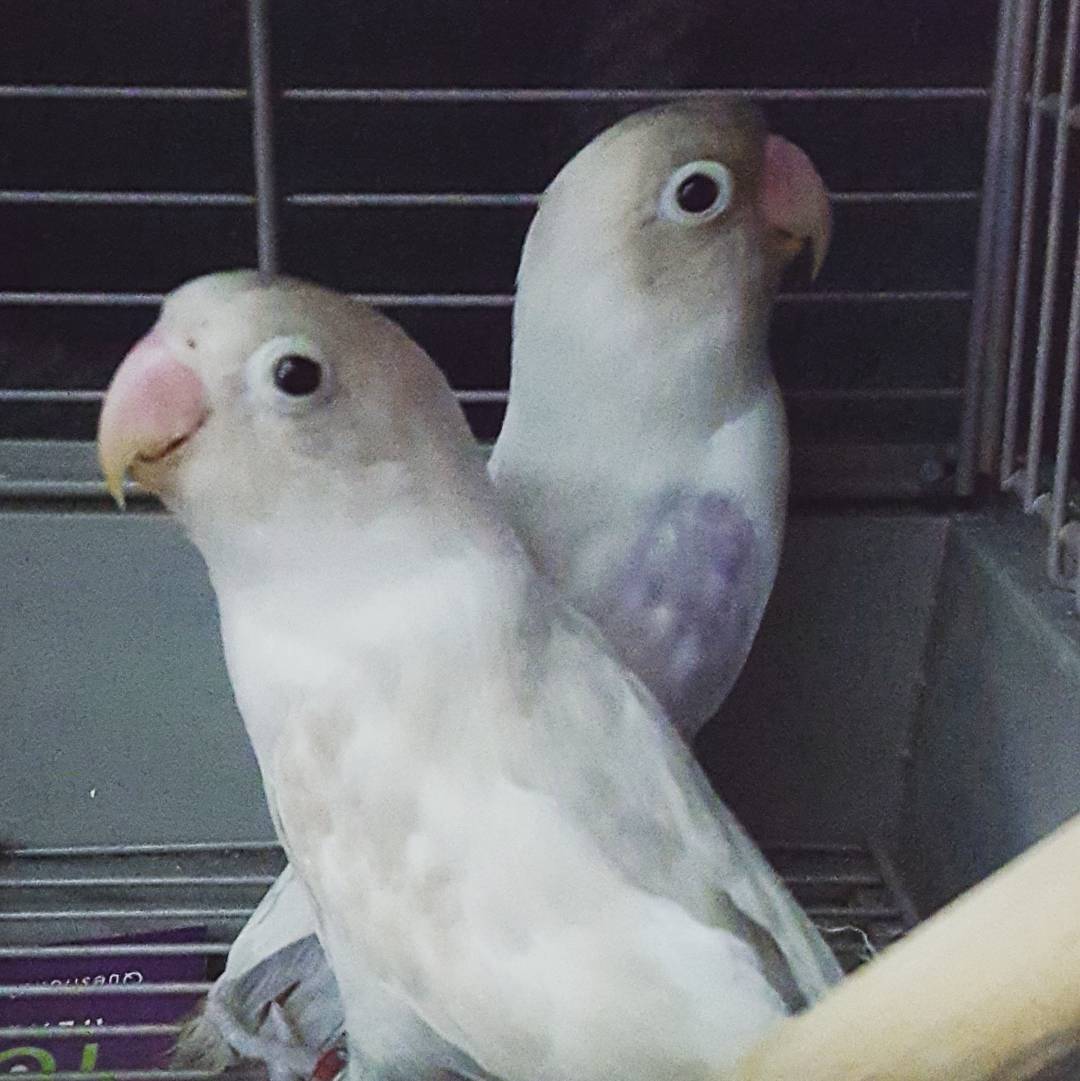
Adoptable: Lime & Sugar

Great for someone who's new to keeping birds.
These 2 act like a married couple. They'll kissy, preen one minute, and they'll have a quick quarrel the next. It's very entertaining.

Sugar has been known to jam out a little bit too.

video


Adoptable: Silly Bird


Silly-Bird could use a good home! She was VERY well behaved amongst the dogs, cats, and people visiting our table at Art 4 the Animals.

100$ Adoption Free includes a large cage (not pictured here, that's just a transport cage) toys, food, and her vetting...!

She's atleast 9 years old, very spunky and she sings and dances.

Mimi & Phoebe Adopted!

Sharon decided to open her home to Mimi & Chicken (now Phoebe). After taking such good care of Andy (Who has almost all his tummy feathers back) how could we say no?

Congrats to everyone! We know you'll be spoiled!

Tuesday, August 30, 2011

SOAR - Supporters of Avian Rights

 http://soarsupportersofavianrights.wordpress.com/

Our Mission
The Mission of the Supporters of Avian Rights is to raise awareness about the plight of the over population crisis of captive bred Parrots. To assess the existing avian cruelty laws and lobby for parrots to be included in these laws or to support the creation and/or changing existing laws to include the protection of all avian species. Many of the existing laws give little to no protection for avians and they are viewed as a commodity rather than a living berating being. We will be a voice for the birds by developing and promoting a unity within the avian community, so that we can better protect the captive bred Avains within the U.S.
Who we are
Supporters of Avian Rights was formed due to the lack of proper laws protecting our Avians Rights. Here in the U.S. the existing laws to protect pets many times does not include Parrots. They are viewed as a commodity rather than living creatures with rights. Many of the existing laws do not clearly define neglect and so prosecuting these cases are not always successful. It is our goal to work with the lawmakers and other organizations, to not only strengthen existing laws but to also help to define what constitutes neglect and abuse so that we can put in place laws that will protect these amazing creatures.
The Parrot population within the U.S. is growing to uncontrollable proportions. Breeding mills are producing more chicks without educating the public on proper care. Birds are not domesticated animals and should never have been placed in cages. This has led to a massive need for Avian Shelters and Rescues once owners realize how difficult it is caring for Parrots within their homes. There are thousands of rescues across the U.S. today and they are already full. The request to relinquish parrots into these rescues is increasing daily. They survive solely on their own resources, since there is no existing funding for Avian Rescues.
SOAR will work to help bring public awareness to the need for change in the existing laws governing the welfare of parrots and the ever growing overpopulation crisis of parrots. We will work with other organizations within the animal/wildlife rights enforcement community and legal professions, to help advocate the need for legal protection, to prevent abuse, neglect and suffering of captive parrots.